


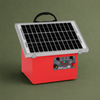
Solar Electric Fence Guide: Setup, Sizing, and Best Practices (2026) - Pillar Page Content
, by matan shushan, 21 min reading time
, by matan shushan, 21 min reading time
A solar electric fence uses a solar-powered charger to send safe electrical pulses through fence wire, keeping livestock in and predators out with zero grid electricity. This 2026 guide covers how solar fence chargers work, how to pick the right size for your land, which animals they control, step-by-step installation, winter performance, and maintenance. If you are fencing 5 to 50 acres, a 0.5-joule charger like the BugBuzz S050 handles the job for under $130.
Last year, a single coyote killed eleven chickens in one night on a hobby farm in Oklahoma. The owner had no electric fence because the nearest power outlet sat 400 feet from the coop. Stories like this are common across rural America, and they almost always have the same root cause: no affordable way to electrify a remote fence line.
A solar electric fence solves that problem. It runs entirely on sunlight, costs nothing to operate, and works in pastures, fields, and backyards that will never see a power line. Whether you raise cattle on 200 acres or keep goats on 5, a solar powered electric fence gives you reliable perimeter protection without digging trenches or paying an electrician.
This guide covers everything you need to know about solar electric fences in 2026. You will learn how they work, how to size one for your property, which animals they handle, and how to install and maintain the system year-round. Every recommendation is based on real-world farm conditions, not lab specs. By the end, you will know exactly what you need and how to set it up.
A solar electric fence is a fencing system powered by a solar panel and rechargeable battery that sends short electrical pulses through fence wire to deter animals and intruders. It works anywhere the sun shines, with no connection to the electrical grid.
A solar electric fence has four main components: a solar panel, a rechargeable battery, an energizer (also called a charger), and the fence wire itself. The solar panel collects sunlight and converts it to electricity. That electricity charges the battery. The energizer draws from the battery and sends a quick pulse through the wire about once per second. When an animal or person touches the wire and stands on the ground, the pulse passes through their body and back to the ground rod, creating a short, memorable shock.
The key difference between a solar fence charger and a plug-in fence charger is the power source. Plug-in units need a 110V outlet. Solar units need nothing but open sky. This makes solar the only practical option for remote pastures, rotational grazing paddocks, and any fence line more than a couple hundred feet from a building.
Modern units store enough energy to run for two weeks without sunshine and deliver output voltages above 7,000 volts. That is more than enough for any livestock or predator situation in North America.
For a deeper look at the technology, read our Complete Guide to Solar Electric Fences. It covers the engineering behind today’s solar chargers and why they have become the top choice for off-grid fencing.
The process is simple and runs on autopilot once you install the system.
Step 1: Solar panel collects energy. The built-in solar panel absorbs sunlight and converts it into DC electricity. A 7.5W panel, like the one on the BugBuzz S050, generates enough daily power to keep the battery topped off in most US climates.
Step 2: Battery stores the energy. The electricity flows into a sealed rechargeable battery (typically 12V lead-acid). It charges during daylight and discharges around the clock, so the fence stays energized at night and on cloudy days.
Step 3: Energizer sends pulses. The energizer takes battery power and converts it into high-voltage, low-amperage pulses that travel through the fence wire about once per second. The voltage is high enough to cause a sharp shock, but the amperage is far too low to cause injury.
Step 4: Ground rod completes the circuit. When an animal touches the wire while standing on the ground, current flows through its body, into the soil, and back to the ground rod. That completes the circuit and delivers the shock. No ground contact, no shock. That is why birds sit on electric fences without getting zapped.
The BugBuzz S050 also has a smart pulse system that adjusts pulse frequency based on battery level. When the battery gets low, pulses space out slightly to extend runtime while keeping the fence active.
Curious how this compares to traditional electric fences? Our breakdown of Solar vs. Traditional Electric Fences walks through the differences in cost, reliability, and power delivery.
Solar electric fence chargers cost less to operate and work anywhere, while plug-in chargers deliver more raw power but require a nearby 110V outlet. For most livestock operations under 200 acres, a solar charger provides more than enough output.
Here is how the two types compare side by side:
|
Feature |
Solar Fence Charger |
Plug-In Fence Charger |
|
Power source |
Sunlight (free) |
110V outlet (grid electricity) |
|
Monthly operating cost |
$0 |
$3 to $15 depending on charger size |
|
Portability |
Fully portable, mount anywhere |
Fixed to outlet location |
|
Max joule output |
0.25J to 2.0J (most residential/farm models) |
0.5J to 15J+ (commercial models available) |
|
Best for |
Remote pastures, rotational grazing, hobby farms |
Barns, corrals, perimeters near buildings |
|
Installation |
Mount on post, drive ground rod |
Run extension cord or hardwire to outlet |
|
Weather resilience |
Works in rain, snow, extreme temps |
Works in all weather (indoors or in weather box) |
|
Battery backup |
Built-in (14+ days on BugBuzz S050) |
Requires separate battery backup |
|
Maintenance |
Clean solar panel, check battery annually |
Minimal |
For most farmers and ranchers, the deciding factor is location. If your fence line sits a quarter mile from the barn, solar is the clear winner. No trenching power lines or running extension cords across a working pasture.
Plug-in chargers still make sense for high-power needs like large cattle operations with heavy vegetation contact, where 6-joule or 10-joule units deliver more punch. For everything else, a well-sized solar electric fence charger does the job. Get the full comparison in our article on Solar vs. Traditional Electric Fence Chargers.
Choosing the right size solar fence charger comes down to three numbers: joules, miles, and acres. Get these right and your fence will perform. Get them wrong and animals will push through a weak pulse or you will overspend on a charger you do not need.
Joules measure the energy in each pulse. More joules means a stronger shock that can push through vegetation, dry soil, and long fence runs. Here is the rule of thumb:
Under 0.25 joules: Small garden fences, pet enclosures, light poultry protection
0.25 to 0.5 joules: Hobby farms, small to mid-size livestock operations, predator deterrent fencing
0.5 to 1.0 joules: Mid-size ranches, multi-strand fencing, areas with regular vegetation contact
1.0 joules and above: Large ranches, thick brush areas, long perimeter runs over 20 miles
Chargers are rated by the maximum fence line distance they can energize. Measure your total fence perimeter and multiply by the number of electrified strands. A 1-mile perimeter with 3 electrified strands equals 3 miles of total fence line. Always choose a charger rated for at least 30% more than your calculated total. Vegetation and wire resistance eat into range.
|
Property Size |
Acres |
Typical Fence Line |
Recommended Joules |
BugBuzz Model |
|
Small garden / poultry run |
1 to 5 |
0.5 to 2 miles |
0.10 to 0.25J |
Coming soon |
|
Mid-size farm / hobby ranch |
5 to 50 |
2 to 10 miles |
0.50J |
BugBuzz S050 |
|
Large ranch / multi-paddock |
50 to 200 |
10 to 30 miles |
1.0J+ |
Coming soon |
The BugBuzz S050 sits in the sweet spot for most US farmers. At 0.5 joules and a 20-mile rated range, it handles everything from a 5-acre goat paddock to a 50-acre cattle pasture. The output voltage of 9,500V (daytime) is strong enough to stop coyotes and contain bulls.
Voltage is what the animal actually experiences. Most livestock respond to anything above 3,000V. Predators and thick-hided animals like wild boar need 5,000V or more. The BugBuzz S050 delivers 9,500V during the day and 7,100V at night, which covers every common livestock and predator scenario in the US.
For a deeper dive into sizing calculations, including multi-strand configurations and vegetation factors, check out our Solar Fence Charger Sizing Guide.
A properly sized solar fence charger for livestock works for nearly every animal situation on a US farm or ranch. The key is matching the right voltage and fence design to the animal.
Cattle: Cattle learn fast. A single electrified wire at nose height (30 to 36 inches) is often enough. A 0.5-joule charger handles most operations up to 50 acres.
Horses: Use high-visibility tape or rope instead of thin wire to prevent run-through injuries. Two strands at 24 and 48 inches work for most horses.
Sheep and goats: Goats test fences constantly. Use 4 to 5 strands starting at 6 inches off the ground. Wool insulates sheep from weak pulses, so you need at least 0.5 joules.
Pigs: Pigs root under fences. A low bottom wire (4 to 6 inches) and at least 0.5 joules are essential.
Chickens and poultry: Electric netting works best. A solar fence charger connects to the netting and pulses the entire mesh, keeping chickens in and predators out.
Coyotes and foxes: A solar electric fence with at least 5,000V stops coyotes reliably. Keep the bottom wire no higher than 6 inches to prevent crawling under.
Wolves: Effective in wolf country (Montana, Idaho, Minnesota, Wisconsin). Multiple strands and 0.5 joules or more are recommended.
Bears: A 0.5-joule charger deters most black bears. Grizzly country may need 1.0 joules or more. Place bait on the wire so the bear contacts it with its nose for maximum first-encounter impact.
Wild boar: A growing problem across the southern US. Boar have thick hides and need 5,000V+ with a low bottom wire.
Learn how to set up species-specific fence configurations in our guide to Solar Electric Fences for Livestock.
Installing a solar electric fence is a straightforward job. Most people finish in a few hours with basic hand tools. Here is the step-by-step process.
Walk the perimeter where you want the fence. Mark corner post locations and gate positions. Measure the total distance. Note spots where vegetation is heavy or the ground is rocky.
Drive corner posts first, then space line posts every 10 to 15 feet along straight runs. T-posts are the most common choice. Use insulated clips or snap-on insulators to keep wire from touching the metal post. The wire should sit about 6 cm (roughly 2.5 inches) from the post surface to prevent energy loss.
String your wire, tape, or rope along the posts. Pull it tight but leave enough slack to flex in wind. Start the bottom wire based on the animal: 6 inches for goats and predator exclusion, 12 inches for cattle. For poultry, simply unroll electrified netting and push the built-in stakes into the ground.
This step is critical. Drive a 6-foot galvanized ground rod at least 1.5 meters (about 5 feet) deep into moist soil near the charger. In dry or sandy soil, install two or three ground rods spaced 10 feet apart and connect them with galvanized wire. Keep ground rods at least 10 cm (about 4 inches) from any wire mesh or metal structures.
Choose a post that gets direct sunlight most of the day. Face the solar panel south. Avoid shade from trees, buildings, or hills, especially in winter when the sun angle is low. The BugBuzz S050 comes with mounting hardware that fits standard fence posts.
Attach the positive (fence) terminal to your fence wire using insulated lead-out cable. Attach the negative (ground) terminal to the ground rod. A loose terminal is the number one cause of weak fence performance.
Use a fence voltage tester to check the pulse at several points along the line. You should see at least 3,000V at the farthest point from the charger. If voltage drops below that, check for vegetation contact, loose connections, or poor grounding. Walk the entire fence line and clear any spots where wire touches grass or brush.
For a more detailed walkthrough with photos and troubleshooting tips, see our How to Install a Solar Electric Fence tutorial.
Yes. Modern solar electric fence chargers work reliably through winter in most US climates. The BugBuzz S050 operates from -15 degrees C to 50 degrees C and holds a charge for 14+ days without any sunshine, making it dependable even during long stretches of overcast winter weather.
Winter days are shorter and cloud cover is heavier, so the concern makes sense. Here is what actually happens. The solar panel produces less energy per day, but the charger also draws very little power. The pulse uses only a few milliamps from the battery. Even weak winter sunlight adds meaningful charge.
The BugBuzz S050 has a built-in 12V 7Ah battery that holds enough power for over 14 days of continuous operation with zero sunlight. In most of the continental US, you will not go 14 consecutive days without at least some sun.
Angle the solar panel toward the south at about 60 degrees to catch the lower winter sun. In summer, 30 to 45 degrees works better. Some farmers adjust the angle twice a year.
Brush off snow and ice from the panel after storms. A covered panel produces nothing.
Check battery voltage monthly during winter. If it drops below 11.5V, the panel may not be getting enough sun. Move the charger to a sunnier post or consider trimming nearby branches that cast shadows.
Clear vegetation from the fence line before winter. Dry weeds and grass touching the wire drain the battery faster.
Farmers in Minnesota, Wisconsin, Montana, and the Dakotas use solar electric fences successfully year-round. The technology works. You just need to give the panel a clear view of the sky and keep it free of snow.
Read more about cold-weather performance, including real data from northern US farms, in our article on Solar Electric Fence Winter Performance.
A solar electric fence is low-maintenance, but it is not zero-maintenance. A few minutes of attention each month keeps the system reliable.
Dust, pollen, bird droppings, and tree sap reduce the panel’s output. Wipe it down with a damp cloth every month, or more often if your area gets heavy dust or pollen. A dirty panel can lose 20% or more of its charging capacity.
Most solar fence charger batteries last 2 to 4 years. Test the voltage with a multimeter every few months. A healthy 12V lead-acid battery should read 12.4V or higher when fully charged. If it consistently reads below 12.0V even after sunny days, the battery is nearing the end of its life.
Replace the battery before it fails completely. A dead battery means a dead fence, and predators do not wait for replacement parts to ship.
Walk the fence at least once a month. Look for:
Vegetation touching or growing over the wire
Broken or sagging wire
Damaged insulators
Posts that have shifted or fallen
Animal damage (rubbing, pushing, digging)
Clear any vegetation contact and fix damage immediately. Every blade of grass touching the wire drains energy from the pulse.
Use a fence voltage tester (available for under $30) to check the pulse at the farthest point from the charger. You want at least 3,000V for livestock and 5,000V for predators. If voltage is low, work backward toward the charger to find the problem. It is almost always vegetation contact, a bad connection, or a grounding issue.
Spring: Vegetation grows fast. Check the fence line weekly and trim or spray along the fence path. Summer: Panel output is highest. Good time to check connections and replace worn insulators. Fall: Clear dead vegetation and fallen leaves. Adjust the solar panel angle for winter sun. Winter: Brush snow off the panel after storms. Check battery voltage monthly.
“We run 35 head of Angus on 40 acres in east Texas. Coyotes were hitting our calves twice a month before we put up the BugBuzz S050. Installed it on a Saturday morning, had the fence hot by lunch. That was eight months ago and we have not lost a single calf since. The solar panel keeps up even through our cloudy winters. Best $130 I have spent on this ranch.”
Dale R., Nacogdoches, TX (verified BugBuzz customer)
BugBuzz builds solar-powered products for people who work outdoors. Our solar electric fence chargers are designed for real farm conditions, not showroom demos. The S050 was tested across temperature extremes, heavy rain, and weeks of cloud cover before it ever went on sale.
We ship free to all 50 states, offer a 30-day return policy with no questions asked, and provide direct support from people who understand livestock fencing. Every product page includes honest specs. We list nighttime voltage alongside daytime voltage because your fence does not stop working at sunset and neither should the numbers you rely on.
When your livelihood depends on keeping animals safe, you need gear that works every day without babysitting. That is what we build.
Ready to protect your livestock and property with solar power? Browse the full BugBuzz Solar Electric Fence collection or go straight to our best-selling S050 Solar Electric Fence Charger with 20-mile range, 0.5 joules, and 14+ days of battery backup.
Shop Solar Electric Fence Chargers
The charger unit typically lasts 8 to 12 years. The rechargeable battery wears out first, usually every 2 to 4 years. Replacement batteries cost $15 to $30 and are easy to swap. The solar panel can last 20 years or more.
A 0.5-joule solar fence charger handles most cattle operations up to 50 acres. Cattle learn quickly after one or two contacts. If you have heavy vegetation or run more than 10 miles of wire, consider 1.0 joules.
No. Electric fence chargers deliver high-voltage but extremely low-amperage pulses lasting a fraction of a second. The pulse deters without injuring. Approved chargers in the US must meet UL safety standards that limit energy output per pulse.
Yes. The built-in battery powers the fence around the clock. The solar panel charges it during the day, and the battery runs the charger at night. The BugBuzz S050 delivers 7,100V at night, well above the threshold for livestock and predators.
Space multiple ground rods at least 10 feet apart and connect them in series with galvanized wire. Most solar fence chargers need at least one 6-foot ground rod. Dry, sandy, or rocky soil may require two or three rods. Poor grounding is the most common reason an electric fence underperforms.
Absolutely. Solar fence chargers are completely portable. Move the charger from paddock to paddock as you rotate your herd. Just pull the ground rod, relocate the unit, and reconnect. The BugBuzz S050 mounts to any standard fence post in minutes.
Zero. Once you buy the charger and fence materials, there are no ongoing energy costs. The only recurring expense is a battery replacement every 2 to 4 years ($15 to $30). Compare that to a plug-in charger adding $3 to $15 per month to your electric bill, and a solar system pays for itself within the first year or two.